From Trimmigrant To Trafficked
The Emerald Triangle's Evolution of Trimmigration

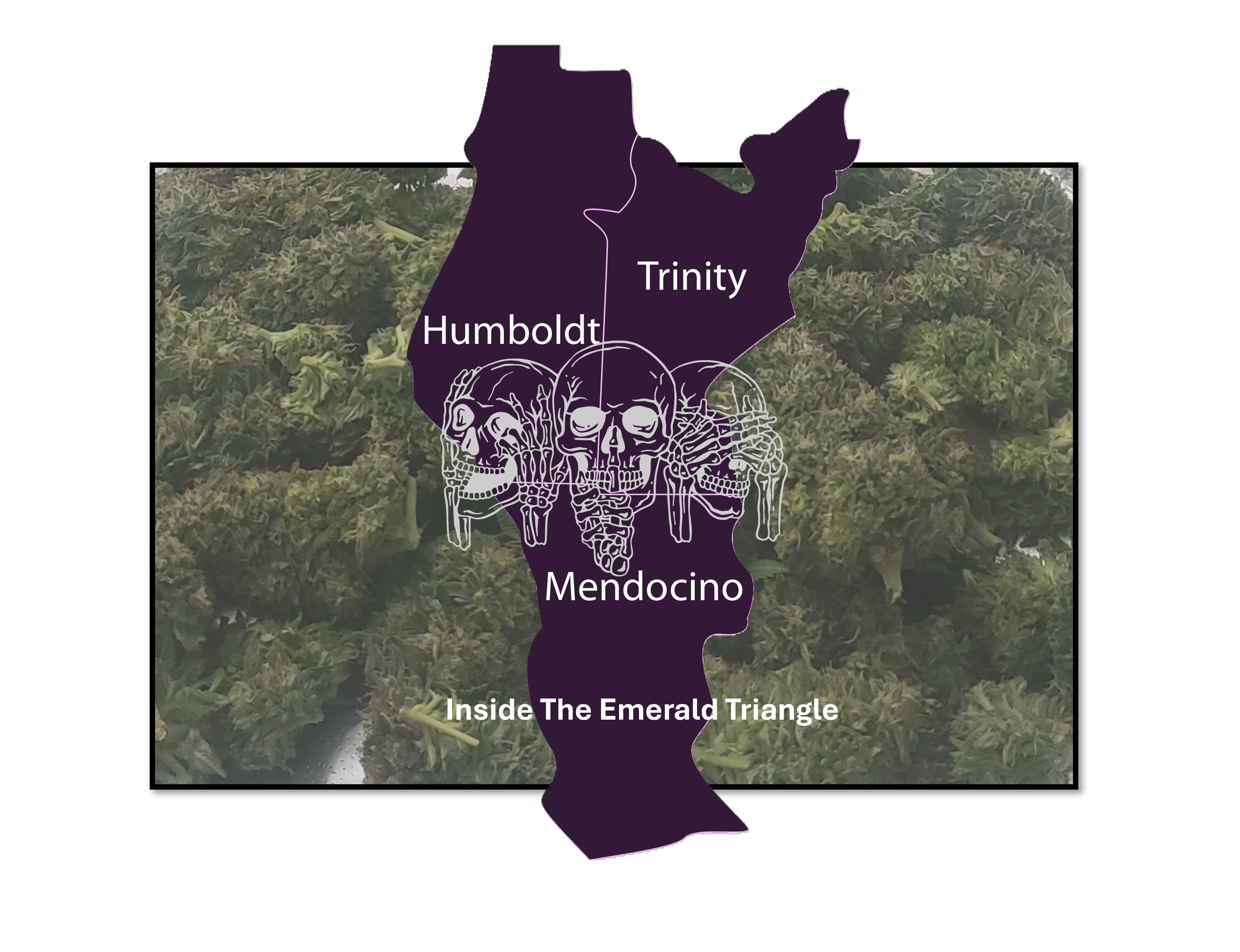
The word “trimmigrant” was coined in the Emerald Triangle to put a name to the thousands of transients who migrated to our lush cannabis corridor of Northern California during harvest season. The evolution of trimmigration into human trafficking with hundreds of people missing and murdered in the Emerald Triangle lands squarely on the shoulders of law enforcement—federal, state, and local.
Creating an illegal market for cannabis, then choking supply with a war on drugs, then caring more about the ag war they created than actual human lives…THAT’S what caused the problem here.
Side Note: For the record, I was raised with a healthy respect for cops and authority in general. I’ve never been arrested, detained, or run with others who were. So, when I say law enforcement caused the problem, it’s out of observational truth in history, not bias.
I went into this project of Inside the Emerald Triangle with neutrality, having conducted hours of interviews with LE. I truly appreciate the work good cops do, the sacrifices they make, and risks they take. I see them as heroes alongside other professions like firefighter, pilot, and of course, military.
My research into the War on Drugs has unearthed some of the corruption, cover-ups, scandals, and exploitation long buried in the Emerald Triangle. It’s ugly to learn and hard to fully digest. The historical evolution of trimmigrants began with adventurous naivety, and sadly ended decades later with misogynist priorities.
A History of Trimmigrants
1960s
The Back to Landers (now known as Legacy Farmers) relocated and started growing everything, including weed, which quickly proved to produce the highest yield and profit, so they grew more. Extended harvest parties were common in Fall, farmers would invite friends to come up from the Bay Area and down from Oregon to help them trim. It was a very communal set up with a full hippie vibe. Some of those visiting friends decided to stay in the area and became Legacy Farmers themselves.
1970s
Legacy Farmers cultivated sinsemillia, the first weed without seeds. American society was easing up on stigmas against cannabis and by the mid-’70s, laws were starting to follow. In an underground employment network, trimmigrants connected with one another as well as with farmers. The farmers shared trimmers within their network. This was a win-win that would continue for decades.
1980s
The Emerald Triangle farmers unwittingly created a world renowned brand. Cannabis enthusiasts came from all over to experience the phenomenon of trimming for an Emerald Triangle farmer. Meanwhile, Reagan’s War on Drugs was in full force with raids, property seizures, hefty fines, and prison for cultivators (trimmers didn’t really face consequences since cops were focused on growers).
Federally funded local Emerald Triangle Sheriff Departments were getting an extra $3-5 million a year, as well as embezzling weed and guns from the evidence locker to sell on the side. This propped up the Black Market (supply was less, so demand and prices grew), as well as local economies. Trimmigrants added heavily to that Q4 economy since they were paid in cash and often spent a good amount of it locally before leaving town (hotels, clothing, shoes, dining, gifts, souvenirs, etc.).
1990s
Loose regulations on medical marijuana laws in California enticed an influx of Cartel and nefarious actors, buying property in cash to use as a fortress. Pollution, trash, rape, murder, and disappearances began to skyrocket. Law enforcement focused on the illegal grows, notoriously never the rapes, murders, or disappearances. This significantly increased risk for trimmers, especially females.
2000s
Trimmigrants started using the internet to locate work in the Emerald Triangle. While law enforcement continued to focus on cannabis cultivation, the rapes, murders, and number of missing people increased year over year. That’s where the Reveal article below picks up. I hope you’ll read it in its entirety. It’s got teeth…very eye opening about the trimmigrant subculture in the Emerald Triangle, offering examples of LE’s willful ignorance through stories from trimmers who lived it. Notably written before the market fell out, and still perfectly captures the essence of the lifestyle at the time.
This article was originally published by Reveal on Sept. 8, 2016, written by Shoshana Walter, shared with permission.
Accountability, Criminal Justice, Immigration, Inequality, Trimmigrants, Worked Over, Workers’ Rights
In secretive marijuana industry, whispers of abuse and trafficking
In the Emerald Triangle, trees are ever present. They peek over small towns and dip into valleys, sheathing this cluster of remote Northern California counties in silence.
For decades, the ancient forests here have provided cover for the nation’s largest marijuana-growing industry, shielding pot farmers from convention, outsiders and law enforcement.
But the forests also hide secrets, among them young women with stories of sexual abuse and exploitation. Some have spoken out; a handful have pressed charges. Most have confided only in private.
Students from the nearest college, Humboldt State University, return from a summer of trimming marijuana buds with tales of being forced to give their boss a blow job to get paid. Other “trimmigrants,” who typically work during the June-to-November harvest, recount offers of higher wages to trim topless.
During one harvest season, two growers began having sex with their teenage trimmer. When they feared she would run away, they locked her inside an oversized toolbox with breathing holes.
Contact with law enforcement is rare and, female trimmigrants say, rarely satisfying.
Continue reading Shoshana Walter’s Reveal article here…
HIGHLY RECOMMENDED: The Mendocino Country Store in the village of Mendocino, California. This delightful little store is packed with quality items and prides itself on outstanding customer service. The seaside location makes for an easy walk from downtown with lots of great stops in along the way. Their concierge-like service offers a wine bar with tractor seats, wine shipping, and personalized gift services. This is a great place to pick up a locally made or artisan gift with a lovely variety of small to interesting to vintage goods. Also a good spot for picnic extras, like sauces, dressings, jams, and of course, wine.
Open daily, 11a-5p. (707) 397-1414 Located at 10481 Lansing St, Mendocino, CA 95460
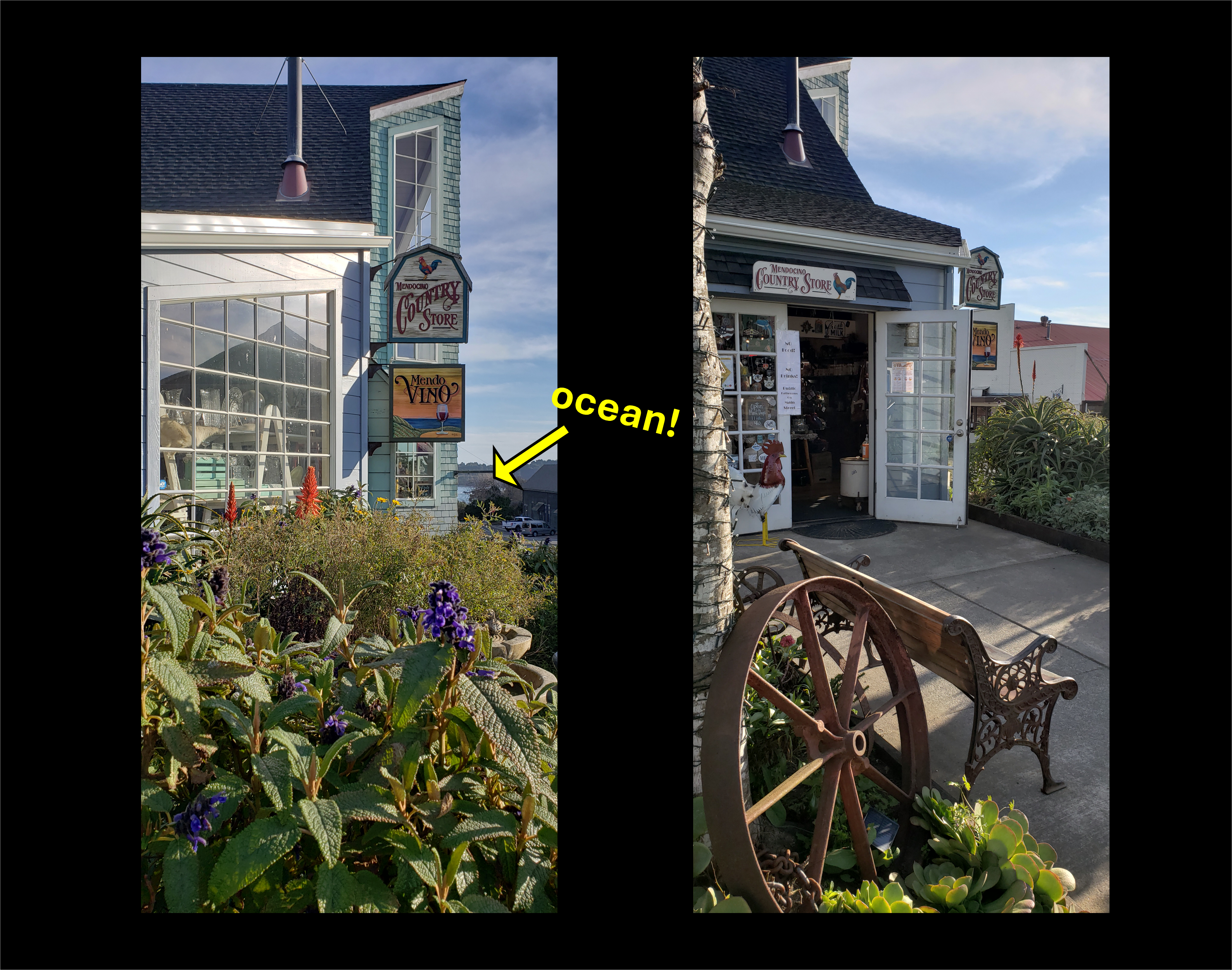
All my recommendations are personally curated, authentic, and unsponsored. Feel free to tag me in pics! @norcalweedgal
The Emerald Triangle’s Murder Mystery Podcast
If you like murder mysteries and podcasts, check out my new Emerald Triangle’s Murder Mystery Podcast on YouTube! Uninterrupted, professional murder mysteries that keep you in suspense until the last scene. Always a twist ending!
SUBSCRIBE TODAY! NEW EPISODE EVERY OTHER SUNDAY!
With high regards, I appreciate your interest in this slice of American history! Follow me on Facebook & Instagram @NorCalWeedGal
GLOSSARY: (If I’ve used a word/term not listed here, consider reading previous articles, or my Official Emerald Triangle Glossary. I try not to repeat definitions in the glossary.)
Q4 - A business abbreviation referring to the 4th quarter of the year from September-December when most companies make profits enough to see them through the next year.
Reveal News - Outstanding online news source with in-depth reporting, award-winning reporters and photo journalists.
Trimmigrant - Word coined for people who migrated from all over the world to the Emerald Triangle to trim weed during harvest season for Legacy Farmers.
Trimmigration - When trimmigrants saturated the Emerald Triangle from about August-November for work during harvest season.
Again, not a podcast. And again, don't shoot the messenger of truth. I'm sorry you aren't a fan of history. This is not sensationalism, it's facts. Rolling Stone, High Times, Swami, Redheaded Blackbelt, KMUD, Reveal (Mother Jones subsidiary), have also published about the area. Are they reporting? Or sensationalizing?
My earlier articles, which it's clear you didn't read, are about the propaganda & indoctrination of prohibition, honoring Legacy Farmers, etc... I interviewed Dr. Bonnie, who worked on the Shafer Report. I interviewed Ed Rosenthal, who wrote the book Legacy Farmers used to cultivate sinsemilla. And I have an interview scheduled with the inventor of the Protopipe, who lives in Mendo. I graduated from Trinity High with a class of like 80 kids. I'm proud of my accomplishments as a local female writer!
I'm also curating The Emerald Triangle's Cannabis Prohibition Museum, which will be mobile and help tourism for dispensaries, events, and visitor centers in EmTri.
When I started uncovering corruption, murder, and shit like toxic herbicides being sprayed by the gov't, I'm not gonna ignore that for your sake, or anyone's. I will offer those facts to folks who may be interested in true history...younger and future generations who deserve to know the whole truth, even the ugly parts. If you don't like it, don't read it. You want something else to serve your agenda? Write it! Harping on local artists when you don't like their work is kinda' cringe.
It’s really disappointing that you seem to only focus on negative aspects in the emerald triangle. All of this salacious and hyperbolic rhetoric is not helpful to a local industry barely hanging on. So many more positive things have actually happened here than you portray and you are really doing a disservice to this place and those of us who have been growing for decades and contributing to the culture and basic needs of this community. All you are doing is rehashing old stories that have been told in print and onscreen a thousand times before and I find it really ignorant and sad that this is how you choose to portray this place. You are pretending to write about “history” when all you are really doing is true crime. This isn’t about any victims, this is about your podcast.